Astronomy Clubs for Children: A Complete Guide for Parents

Discover the real benefits of astronomy clubs for children, what sessions involve, age-wise activities, and how to choose the right club in 2026.
An astronomy club for children is a guided, hands-on program where kids explore space through lessons, telescope viewing, and stargazing sessions. Most clubs run weekly or monthly and are led by trained instructors.
If your child points at the sky and asks endless questions about stars and planets, astronomy clubs for children turn that curiosity into real learning. They combine science, storytelling, and outdoor observation in a way that keeps young minds engaged long after the session ends.
This guide walks you through what these clubs actually involve, the benefits backed by current research, age-appropriate activities, and a practical checklist for choosing the right one. By the end, you will know exactly what to look for.
What Is an Astronomy Club for Kids?
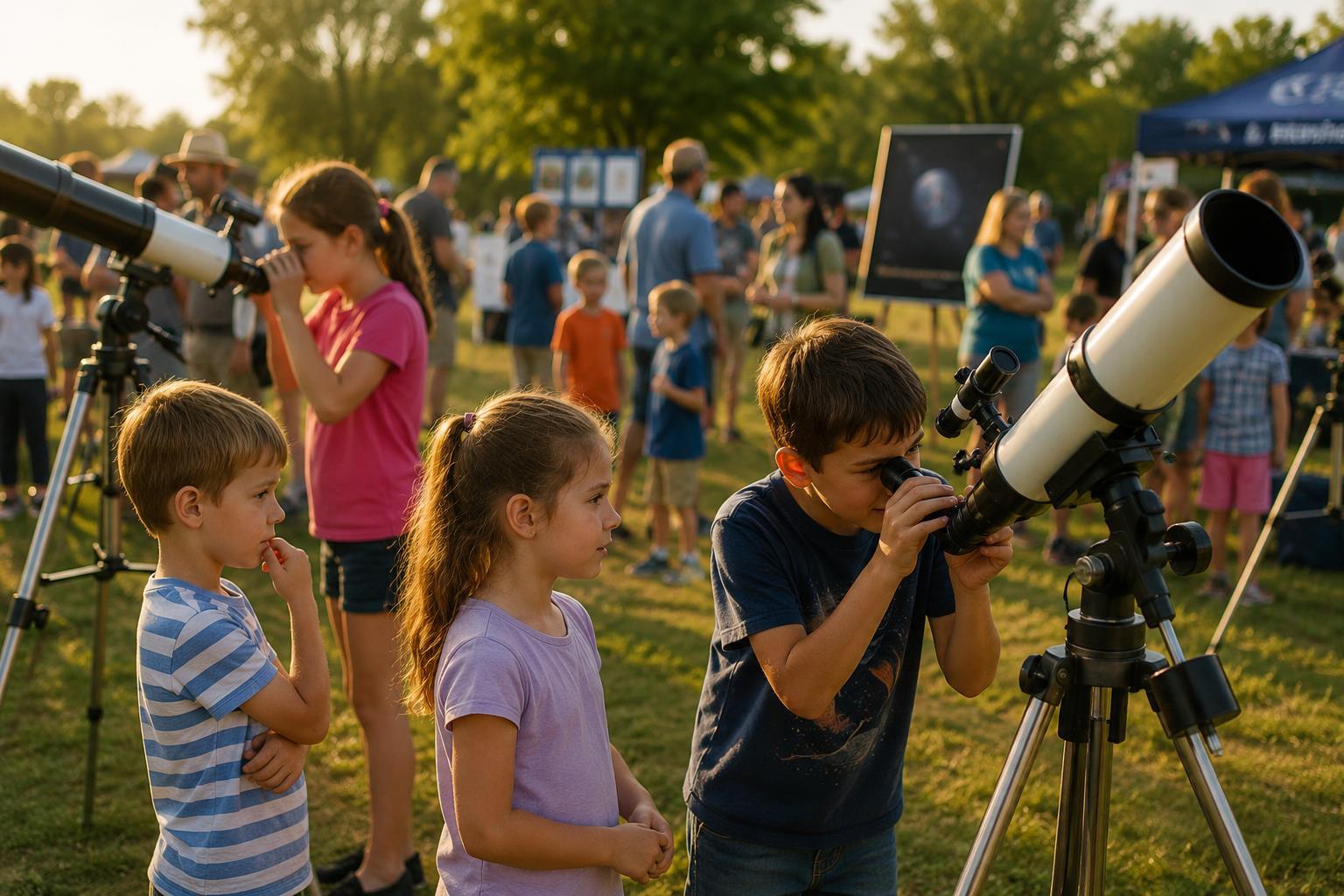
An astronomy club for kids is a structured extracurricular group where children learn about celestial objects, space missions, and the night sky through lessons, activities, and telescope sessions. Most clubs meet weekly or monthly, either after school or on weekends, and are run by trained educators or amateur astronomers. Sessions typically blend classroom learning with outdoor stargazing whenever weather allows.
Why Astronomy Matters for a Child's Development
Beyond stargazing, astronomy quietly builds skills children carry into every other subject and social setting.

Cognitive & Scientific Thinking Skills
A 2025 study on early childhood astronomy education found that learning about the night sky strengthens critical thinking, observation, and reasoning skills in young children. Tracking moon phases or spotting constellations teaches kids to notice patterns, form questions, and test their own ideas, skills that carry over directly into maths and science classwork.
Curiosity, Wonder, and Lifelong Learning
Children are naturally curious about the sky long before they can name a single planet. Astronomy clubs channel that wonder into a lifelong learning habit, showing kids there is always something new to discover, whether it is a fresh space mission update or a meteor shower happening that same month.
Confidence Through Hands-On Discovery
Operating a telescope, identifying a planet correctly, or explaining a concept to a friend gives children a real sense of achievement. This hands-on discovery builds confidence that goes beyond astronomy itself, encouraging kids to speak up in class and try new challenges without fear of getting it wrong.
Key Benefits of Joining an Astronomy Club
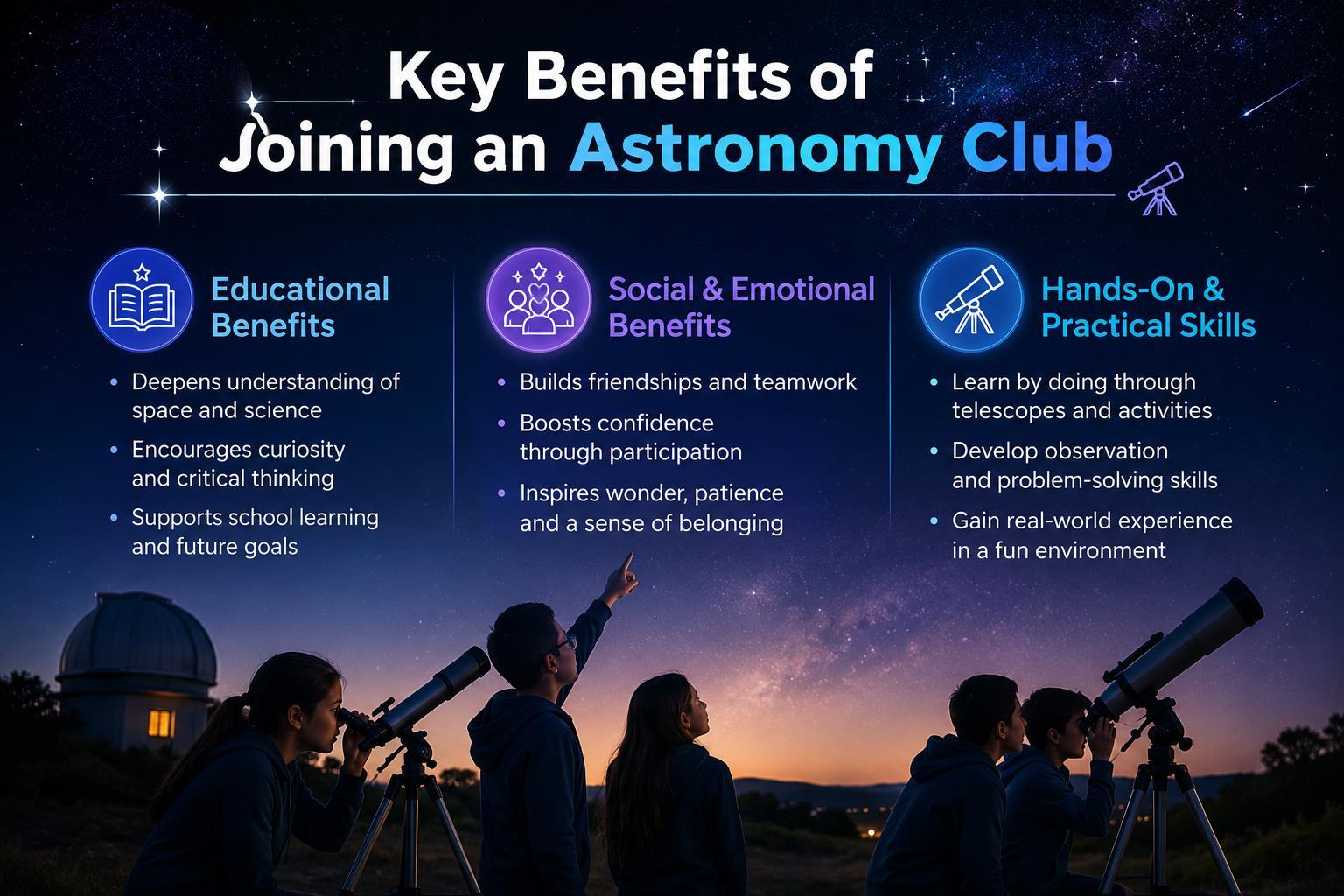
The benefits of an astronomy club for children go well beyond a fun hobby or weekend activity.
Educational Benefits
Astronomy naturally connects to maths, physics, and geography, giving children a practical reason to care about subjects that can otherwise feel abstract. Calculating distances between planets or understanding why seasons change turns textbook concepts into something children can see and question for themselves, making classroom learning stick longer.
Social & Emotional Benefits
Extracurricular groups, including astronomy clubs, help children build teamwork, communication, and stress-management skills, according to a 2025 fact sheet on youth wellbeing. Meeting other kids who share the same fascination with space also gives children a sense of belonging that pure academics rarely provide.
Hands-On & Practical Skills
Most astronomy clubs give kids real time with telescopes and binoculars, teaching them to align, focus, and track objects safely. Even NASA's own volunteer astronomy club network relies on amateur clubs sharing telescopes with communities, showing just how central hands-on equipment time is to learning astronomy properly at any age.
What Happens During an Astronomy Club Session?
A typical session blends short lessons, group activities, and real observation time, indoors or under open skies.
Typical Weekly Activities
Most sessions open with a short, age-appropriate lesson on a space topic, such as the solar system or a recent mission update. This is usually followed by a hands-on activity like building a model rocket or mapping constellations, before wrapping up with group discussion or a quick recap.
Stargazing & Observation Nights
When skies are clear, clubs move outdoors for guided stargazing using telescopes or binoculars. With 2026 bringing a strong Perseid meteor shower in August and a total lunar eclipse in September, clubs often plan special observation nights around these events, giving children a reason to connect lessons with real skywatching.
Projects, Models, and Astronomy Kits
Many clubs send children home with small projects such as solar system models, DIY sundials, or observation logbooks to fill in between sessions. These take-home pieces keep the learning going outside club hours and give parents an easy way to ask their child what they discovered that week.
Astronomy Club Activities by Age Group
Astronomy activities for children work best when matched to age and attention span, so most clubs plan sessions around three broad stages.
| Age Group | Focus Area | Sample Activities |
|---|---|---|
| 5-7 years | Wonder and basic concepts | Story-based lessons, simple models, day and night sky exploration |
| 8-11 years | Constellations and simple physics | Star chart reading, telescope basics, rocket building |
| 12+ years | Advanced concepts and astrophotography | Deep-sky observation, basic astrophotography, mission tracking |
How to Choose the Right Astronomy Club for Your Child
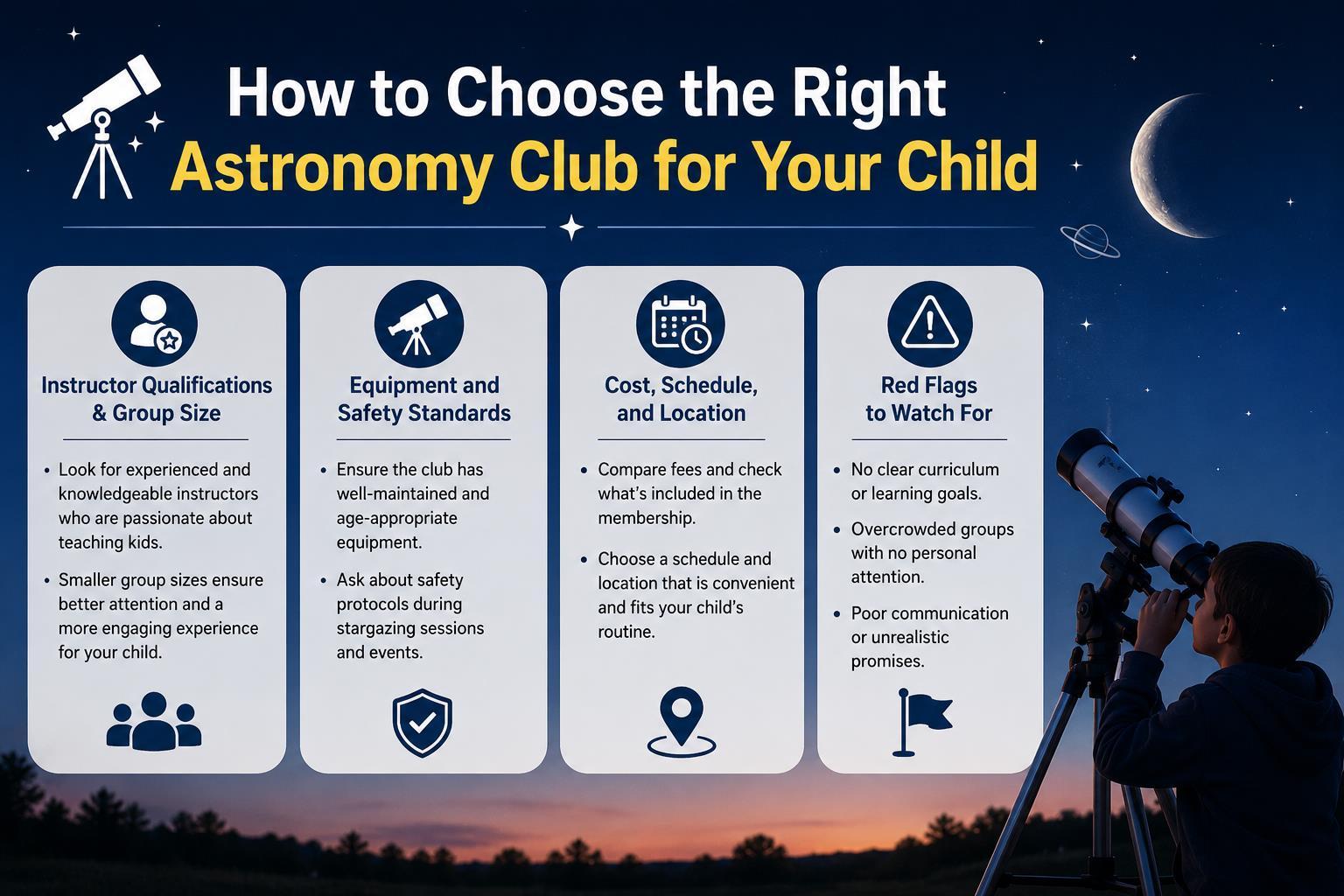
Not every after-school astronomy program is built the same way, so a few checks help.
Instructor Qualifications & Group Size
Ask who is actually teaching the sessions and what their background in astronomy or science education looks like. Smaller group sizes matter too, since a child is far more likely to get real telescope time and one-on-one guidance in a group of ten than in a room of forty.
Equipment and Safety Standards
A good astronomy club should have working telescopes, proper solar filters for daytime sun viewing, and clear safety protocols for outdoor night sessions. If a club cannot show you their equipment or explain how they supervise children during stargazing trips, treat that as a warning sign, not a minor detail.
Cost, Schedule, and Location
Costs for a children's astronomy club vary depending on session frequency, equipment included, and whether trips to dark-sky locations are part of the program. Before enrolling, ask for a clear breakdown of what is included, how often sessions run, and how far you will need to travel each time.
Red Flags to Watch For
Be cautious of clubs that promise guaranteed sightings on every session, since weather controls what is visible, not the instructor. Also watch for vague answers about instructor experience, no visible safety plan for night sessions, or pressure to buy expensive personal equipment before your child has even attended one class.
Conclusion
Astronomy clubs for children do more than fill an afternoon. They build scientific thinking, confidence, and a genuine curiosity about the universe that follows kids well beyond the club itself. Whether your child is just starting to notice the moon or already asking about black holes, the right club meets them where they are. At Tanmaye's Amazing Space, we design every session around exactly that idea. Reach out to find a class that fits your child's age and curiosity.
Frequently Asked Questions
Here are answers to some of the most common questions about children's astronomy clubs.
What age can my child start an astronomy club?
Most astronomy clubs accept children from age 5 upward, with content adjusted by age group. Younger kids focus on stories and simple concepts, while children aged 8 and above can start using telescopes, reading star charts, and joining more detailed lessons.
Do kids need their own telescope?
No, most astronomy clubs provide telescopes and binoculars during sessions. A personal telescope only becomes useful once a child has attended a few classes and shown real interest, since a beginner-friendly refractor or tabletop reflector works better than an expensive first purchase.
How much does an astronomy club typically cost?
Costs vary depending on session frequency, included equipment, and whether stargazing trips to dark-sky locations are part of the program. Weekly after-school programs usually cost less than clubs that include telescope kits, take-home materials, or overnight observation trips, so always ask for a full breakdown.
Is astronomy club worth it for kids?
Yes, for most children. Beyond stargazing, astronomy clubs build critical thinking, teamwork, and communication skills that carry into schoolwork and other activities. If your child already shows curiosity about space, a club turns that interest into consistent, guided learning instead of occasional questions.
What should my child bring to sessions?
Most clubs supply the equipment, so children typically just need a notebook for observations, warm clothing for outdoor sessions, and comfortable shoes. Some clubs recommend a small torch with a red filter, since it protects night vision better than a regular flashlight.

Written by
Tanmaye Vyas
Sharing wonders of the cosmos and inspiring generations of space enthusiasts since 1986.
Tags
Keep reading
Related posts

Explore the cosmos in person
Book a guided tour at Tanmaye's Amazing Space, Ahmedabad.